中国大学排名一本:重点大
中国大学排名一本:重点大学与普通一本的界限
In China’s higher education system, the term “一本” (yī běn) refers to universities admitted in the **first batch** of the National College Entrance Examinatio…
In China’s higher education system, the term “一本” (yī běn) refers to universities admitted in the first batch of the National College Entrance Examination (Gaokao) recruitment process. As of 2024, approximately 772 institutions were classified as first-batch (一本) universities by the Chinese Ministry of Education, yet only 147 of these are designated as “Project 211” or “Project 985” key universities — the elite tier that receives concentrated national funding (Ministry of Education of the People’s Republic of China, 2024, National Higher Education Institutions List). This gap of more than 600 institutions creates a critical distinction for international students: not all 一本 universities carry equal academic weight, research output, or international recognition. According to the 2027 QS World University Rankings, only 29 Chinese universities appear in the global top 500, meaning the vast majority of first-batch institutions operate below that threshold. For an overseas student navigating China’s complex university hierarchy, understanding the boundary between “重点大学” (zhòngdiǎn dàxué — key/keypoint universities) and “普通一本” (pǔtōng yī běn — ordinary first-batch universities) is essential for making an informed application, whether through the Chinese Scholarship Council (CSC) or self-funded channels.
The Gaokao Batch System: How “一本” Is Defined
China’s university admission system categorizes institutions into batches (批次, pīcì) based on historical Gaokao score cut-offs. The first batch (一本) comprises universities that recruit students with the highest entrance exam scores. This classification is not static — the Ministry of Education periodically adjusts the list, and since 2017, several provinces have merged first and second batches into a single “本科批” (undergraduate batch), though the underlying tier distinctions persist in university reputation and employer perception.
The “key university” (重点大学) designation originated from two national projects: Project 211 (launched 1995, funding 116 institutions) and Project 985 (launched 1998, funding 39 elite universities). These projects allocated billions of RMB in research grants, faculty development, and infrastructure. In 2017, China replaced both with the Double First-Class University Plan (双一流), which currently includes 147 universities as of 2024. All Double First-Class universities automatically hold 一本 status, but not all 一本 universities are Double First-Class.
The practical implication: a university that is “一本” but not “重点” may have a lower research output, fewer international partnerships, and less robust English-taught program offerings. For international applicants, checking whether a target institution appears on the Double First-Class list is a reliable first filter for academic quality.
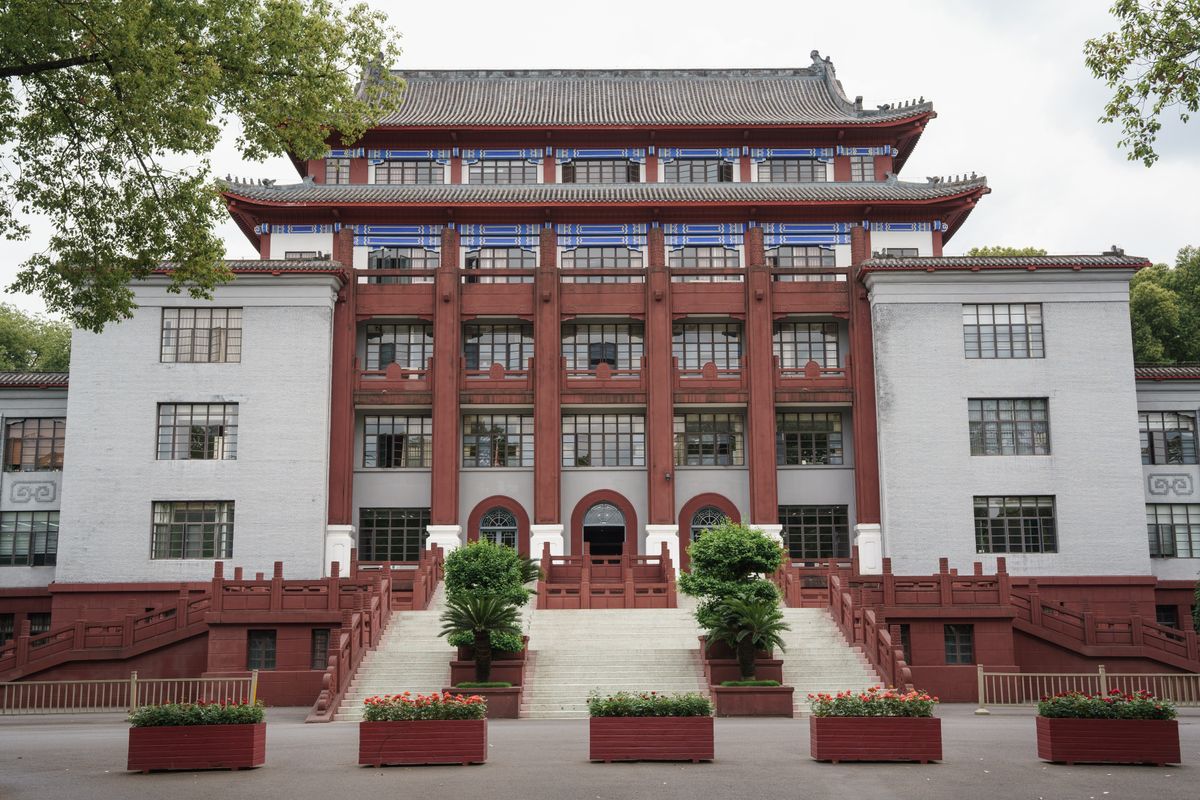
Key Universities (重点大学): Elite Tier Characteristics
Key universities in China receive preferential treatment in funding, faculty recruitment, and international collaboration. The 39 Project 985 universities — including Tsinghua, Peking, Fudan, and Zhejiang — dominate global rankings and typically require Gaokao scores in the top 1-2% of test-takers nationwide. These institutions also host the majority of CSC (Chinese Scholarship Council) full scholarships: in 2023, CSC allocated approximately 63,000 scholarships to international students, with over 70% directed to Double First-Class universities (China Scholarship Council, 2023, Annual Report).
For overseas applicants, key universities offer distinct advantages:
- Higher English-taught program density: Tsinghua offers over 30 bachelor’s programs fully in English; Peking University offers 20+.
- Stronger alumni networks: Project 985 universities produce the majority of Chinese corporate executives and government officials, which can benefit international graduates seeking employment in China.
- Greater research funding: The average annual research budget of a Project 985 university exceeds ¥1.5 billion RMB (approximately $210 million USD), compared to ¥150-300 million for a typical ordinary 一本 institution (National Bureau of Statistics of China, 2024, Science and Technology Statistics).
However, admission to key universities is highly competitive. For self-funded international students, tuition fees at elite institutions range from ¥20,000 to ¥60,000 RMB per year for undergraduate programs, significantly higher than the ¥12,000-25,000 RMB at ordinary 一本 universities.
Ordinary 一本 Universities: Breadth and Accessibility
Ordinary 一本 universities (普通一本) form the middle tier of China’s higher education system. These institutions typically have strong regional reputations but lack the national prestige of key universities. Examples include Hangzhou Dianzi University, Anhui University of Finance and Economics, and Guangdong University of Technology — all solid institutions that recruit within their provinces but rarely appear in global rankings.
For international students, ordinary 一本 universities present several practical benefits:
- Lower admission thresholds: Gaokao score requirements for domestic students are 30-50 points lower than for equivalent key universities in the same city, and international student entry requirements are proportionally less stringent.
- More affordable tuition: Average annual tuition for international undergraduates at ordinary 一本 institutions is ¥15,000-22,000 RMB, roughly 40% less than elite counterparts.
- Smaller class sizes and more personal attention: Key universities often have 200+ student lecture halls; ordinary 一本 universities typically maintain class sizes of 30-50 students.
- Regional industry connections: Many ordinary 一本 universities have strong ties with local enterprises. For instance, Shenzhen University (一本, not Double First-Class) graduates are heavily recruited by Shenzhen’s tech ecosystem, including Tencent and Huawei.
The trade-off is clear: ordinary 一本 universities offer less international recognition and fewer scholarship opportunities. CSC scholarships for ordinary 一本 institutions are limited — approximately 15-20% of total CSC slots go to non-Double First-Class universities (China Scholarship Council, 2023). Self-funded students or those applying through provincial government scholarship programs may find these institutions more accessible.
Double First-Class Plan: The New Benchmark
Since 2017, the Double First-Class University Plan (双一流) has effectively replaced Project 211/985 as the official measure of elite status. The plan currently includes 147 universities and 465 disciplines designated for world-class development. This list is dynamic — the Ministry of Education reviews and adjusts it every five years, with the next update expected in 2026.
For international students, the Double First-Class designation carries specific advantages:
- Priority in visa processing: Some Chinese embassies expedite student visa (X1/X2) applications for Double First-Class university admittees.
- Enhanced scholarship eligibility: The Chinese Government Scholarship (CGS) program allocates approximately 85% of its full scholarships to Double First-Class institutions (Ministry of Education, 2024, Study in China Policy Brief).
- Stronger international partnerships: Double First-Class universities maintain an average of 180+ active international exchange agreements, compared to 30-50 for ordinary 一本 universities (QS, 2024, China University Rankings Methodology Report).
A notable shift: some universities previously classified as “ordinary 一本” have been elevated to Double First-Class status, including Nanjing University of Information Science and Technology and Southwest Petroleum University. This means the boundary between 重点 and 普通 is not fixed — international applicants should verify the current Double First-Class list at the time of application.
Practical Selection Criteria for International Applicants
When choosing between a key university and an ordinary 一本 institution, international students should evaluate five concrete factors:
1. Program language and medium of instruction Key universities dominate English-taught STEM and business programs. Ordinary 一本 universities often require higher Chinese proficiency (HSK 4-5) for admission, though some offer preparatory Chinese language years.
2. Scholarship availability CSC scholarships are concentrated in key universities. However, provincial government scholarships — such as the Beijing Government Scholarship or Zhejiang Provincial Scholarship — are more evenly distributed and may cover ordinary 一本 institutions.
3. Location and cost of living Key universities cluster in first-tier cities (Beijing, Shanghai, Guangzhou), where monthly living costs average ¥3,500-5,000 RMB. Ordinary 一本 universities in second-tier cities (Hangzhou, Chengdu, Wuhan) offer living costs of ¥2,000-3,500 RMB.
4. Post-graduation employment pathways Key universities provide stronger brand recognition for global employers. Ordinary 一本 universities may offer better local job placement rates within their province.
5. Application timeline and requirements Key universities often have earlier application deadlines (December-February for fall intake) and require higher standardized test scores (SAT/ACT/GRE) or more rigorous portfolio reviews. Ordinary 一本 universities typically accept applications through March-May and have more flexible document requirements.
For cross-border tuition payments, some international families use channels like Flywire tuition payment to settle fees securely without foreign exchange complications.
Regional Variations and Provincial Batch Mergers
The 一本 classification varies significantly by province due to China’s decentralized education administration. Since 2017, 14 provinces — including Beijing, Shanghai, Zhejiang, and Shandong — have merged first and second batches into a single “本科批” (undergraduate batch). In these provinces, the 一本 label no longer appears on admission forms, yet universities retain their historical tier reputation.
Key regional patterns:
- Beijing and Shanghai: Most universities in these municipalities are 一本 or higher, with very few second-batch institutions.
- Western provinces (Gansu, Xinjiang, Qinghai): Fewer 一本 universities exist, and the cutoff scores for domestic students are 20-50 points lower than in eastern provinces.
- Provincial “key” designations: Some provinces maintain their own “省重点” (provincial key) lists, which may include ordinary 一本 universities with strong local reputations.
For international applicants, the practical effect is that a university’s 一本 status may be less relevant than its actual academic output, program quality, and international student support services. Checking QS subject rankings or ESI (Essential Science Indicators) top 1% disciplines provides more objective quality signals.
FAQ
Q1: Is a Double First-Class university always better than an ordinary 一本 university for international students?
Not necessarily for every student. Double First-Class universities offer stronger research output and global recognition — for example, 147 institutions hold this designation as of 2024. However, ordinary 一本 universities can provide lower tuition (averaging ¥15,000-22,000 RMB/year), smaller class sizes, and stronger regional industry connections. Students prioritizing affordability or specific local job markets may find ordinary 一本 institutions more suitable. The choice depends on career goals, budget, and desired program language.
Q2: Can I get a Chinese Government Scholarship (CSC) at an ordinary 一本 university?
Yes, but the probability is lower. CSC allocates approximately 85% of its full scholarships to Double First-Class universities. The remaining 15% is distributed among over 600 ordinary 一本 institutions, meaning competition is intense. However, provincial government scholarships (e.g., Beijing Government Scholarship, Zhejiang Provincial Scholarship) are more evenly distributed and may cover ordinary 一本 universities. Self-funded students or those with strong academic records may still secure partial scholarships at these institutions.
Q3: How can I verify whether a Chinese university is 一本 or 重点?
The most reliable method is to check the Ministry of Education’s official list of Double First-Class universities (updated 2022, next update expected 2026). For 一本 status, consult the Gaokao admission batch list published annually by each province’s Education Examination Authority. Alternatively, use the CSC “Study in China” portal (www.campuschina.org), which lists scholarship-eligible institutions by tier. Note that some universities may be 一本 in one province but 二本 in another due to regional variations — always verify for your specific application province.
References
- Ministry of Education of the People’s Republic of China. 2024. National Higher Education Institutions List.
- China Scholarship Council. 2023. Annual Report on International Student Scholarships.
- National Bureau of Statistics of China. 2024. Science and Technology Statistics Yearbook.
- QS World University Rankings. 2027. China University Rankings Methodology Report.
- Ministry of Education of the People’s Republic of China. 2024. Study in China Policy Brief: Double First-Class University Plan Update.